

Originally published in ACJS Dialogue Newsletter, Spring 2026.
During my recent trip to Buenos Aires, one of the most meaningful lessons I took home did not come from a conversation. I barely speak Spanish. Instead, it came from a daily ritual I encountered in parks, on sidewalks, in cafés, and in stores. Everywhere I went, people were sipping mate.
In the United States, we encounter yerba mate in refrigerated bottles at the grocery store. In Argentina, mate, pronounced “mah tay,” is a hot, loose-leaf, tea-like beverage shared communally. I had heard of mate before, but I was unaware of its cultural significance. What I did not understand until I experienced it firsthand was how much community is quietly learned through the practice itself.
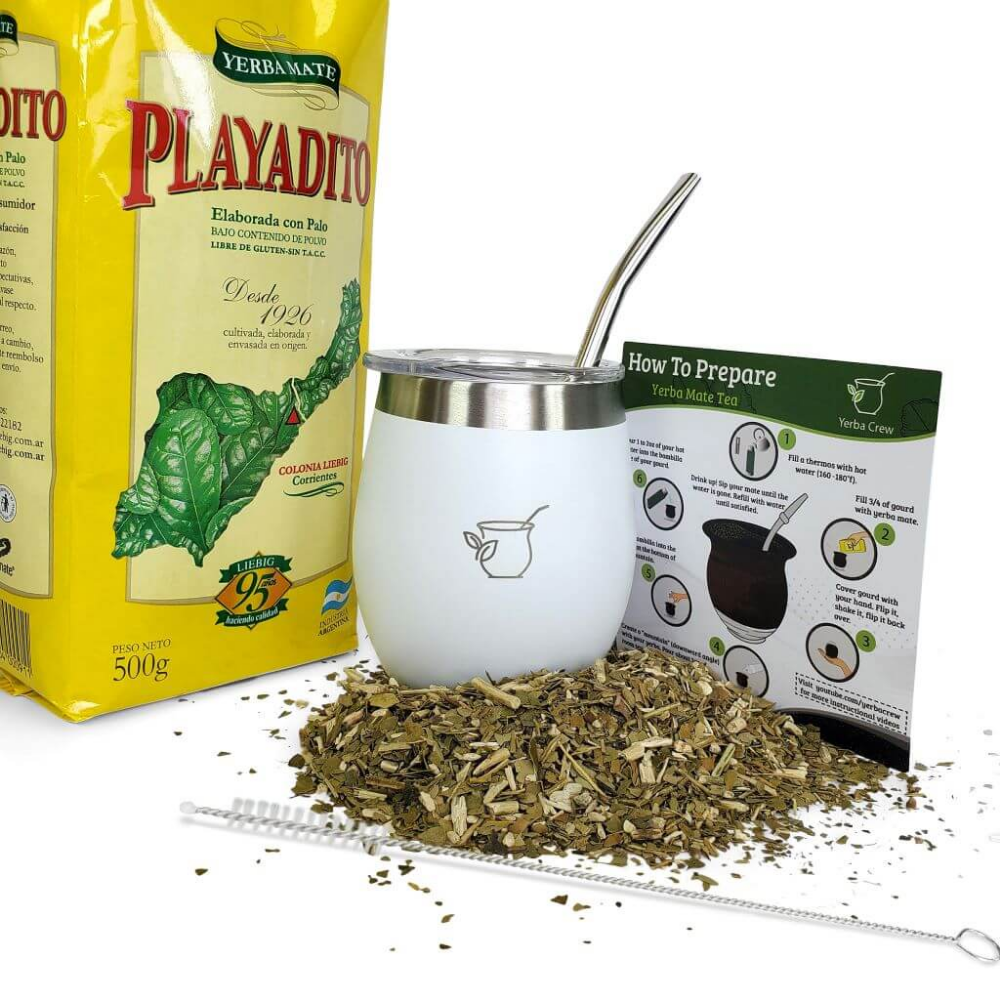
As a visitor, I entered mate culture as an outsider. I did not know the rules. I watched for several days from afar, trying to understand what was happening and to pick up on the nuances. I learned by observing how the cup moved from hand to hand, how no one rushed, how no one asked for modifications, and how nobody used their own straw. One day, as a group of college-aged men and women sat in a circle sipping mate, I was summoned over with a wave. I noticed that the invitation to join the circle, the mateada, came before any explanation of how the ritual worked. Participation preceded instruction. Belonging came first.
I was intimidated by the round gourd with a metal straw, the bombilla, protruding from it. Silently, the mate-filled gourd was passed to me, and I froze.

Mate is not simply consumed. It is shared. One cup. One straw. Passed deliberately around the group. The person serving, the cebador, prepares and refills the mate but does not control the group. Their role is responsibility, not authority. They set the pace, ensure fairness, and quietly correct missteps without drawing attention to them. Everyone waits their turn. Everyone accepts the mate as it is served. The ritual only works because participants respect one another and the shared norms that hold the circle together.
The cebador poured water from his termo, a thermos, into the gourd, filling it until just before the leaves were fully covered. I hesitated and went to stir the mate. I was stopped and shown that the mate is never stirred. Moving the straw, I learned, will clog it with the leaves. No words were spoken. I felt the power of ancestral knowledge being passed down to me through gesture alone. The cebador was like a caring uncle, guiding me by example and gently correcting me when it was needed.

In time, I learned what I came to think of as the cardinal rules of mate:
- The cebador controls the flow.
- The cebador drinks the first sip so the group does not receive the bitter dust that immediately settles.
- Once the straw is inserted, it is not moved again.
- Drink what is given to you. You do not choose the flavor of the mate.
- Never wipe off the straw. This is the ultimate sign of disrespect to the group.
- Wait your turn.
- Drink all the liquid.
- Return the gourd to the cebador.
- This is done largely in silence. If you say gracias, it means you are finished drinking with the mateada.
What struck me was how little of this needed to be explained. No one named the values embedded in the practice, and no one framed it as community building. Yet the lessons were unmistakable: trust is assumed rather than negotiated, patience is practiced rather than requested, leadership is exercised through care rather than dominance, and obligation to the group outweighs individual preference.
Watching this ritual unfold, I could not help but think about how rarely we allow people to learn community this way in the United States.
We often expect trust, accountability, and shared responsibility to appear at the moment harm occurs, rather than being cultivated long before they are needed.
Mate culture offered a different lesson. It showed how community norms can be learned through participation. No one handed me a list of rules when I joined the circle. I was invited to sit, observe, and take part. Correction came immediately, but quietly and empathetically. The goal was not to single anyone out, but to preserve the shared experience for everyone.
In restorative and community justice work, we often talk about the importance of trust, dialogue, and accountability. Mate reminded me that these are not abstract principles.
They are habits learned through repeated, ordinary interactions that teach people how to share space, how to wait, how to listen, and how to be guided without being controlled. When these habits are absent, restorative processes can feel forced or artificial. When they are present, repair feels like a natural extension of how people already relate to one another.
The contrast with many U.S. justice settings is stark. Our systems tend to prioritize speed, efficiency, and individual responsibility, often at the expense of relationship and context. Accountability is frequently public and punitive. Leadership is associated with authority rather than care. Participation is structured, scripted, and time limited.
Mate culture does not eliminate conflict or disagreement, nor does it erase boundaries. What it does is normalize shared responsibility for maintaining the integrity of the group. Everyone knows the rules and their role, even if they are never formally stated. Everyone has a stake in ensuring the ritual continues to function. That kind of collective investment is foundational to community justice, yet it is often missing from the systems we rely on to respond to harm.
The lesson is not that the United States should adopt mate culture. Cultural practices are deeply rooted in history, place, and shared meaning. The more important lesson is that community justice depends on culturally grounded practices that teach belonging, patience, and mutual obligation over time. Many of these practices already exist in the United States, even if we rarely name them as justice work.
We see them in potluck meals where everyone contributes and no one is in director control, even if the host sets a theme. We see them in faith-based fellowship meals, recovery meetings, barbershops, beauty salons, and other informal spaces where turn-taking, storytelling, confidentiality, and accountability are practiced through unspoken and unwritten rules. These are places where people learn how to be part of something larger than themselves, governed solely by tradition.

Too often, our justice system treats community as something to be repaired after harm rather than something to be cultivated before it.
Restorative justice initiatives struggle when they are asked to operate in isolation, without the cultural groundwork that makes restoration possible. When shared norms are weak or absent, dialogue becomes procedural and accountability becomes performative. Mate reminded me that when community has already been practiced, repair does not feel like an intervention. It feels like a continuation. The process becomes a comfort rather than a burden.
What I learned through mate was not a technique for resolving conflict. It was a reminder that justice begins long before harm occurs. It is learned slowly, through shared rituals and everyday practices that teach people how to belong. One cup. One pause. One sip at a time.
APA Citation: Morgan, J.J. (2026, Spring). Learning community, one sip at a time: Lessons from a mate circle in Buenos Aires. Dialogue, Academy of Criminal Justice Sciences Restorative and Community Justice Section Newsletter, 10(1), 22–24.